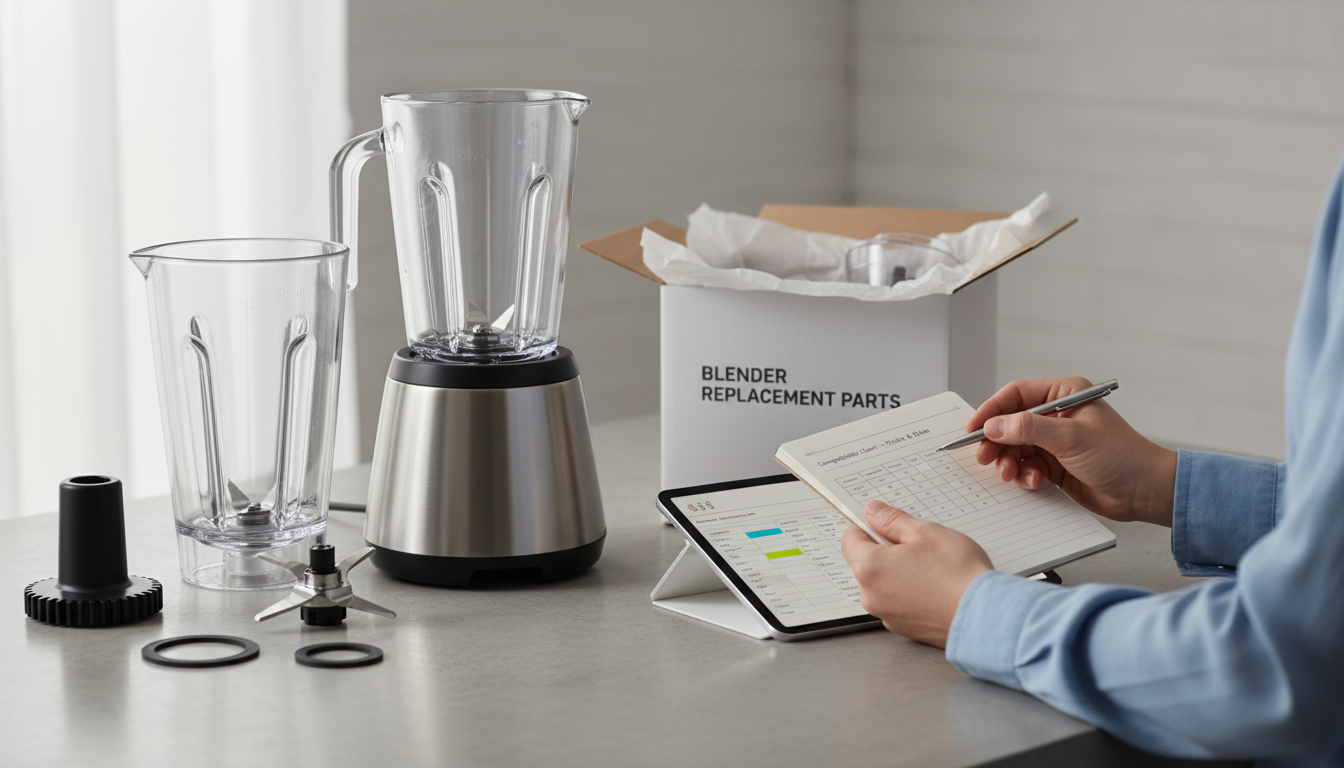
Finding the Right Immersion Blender Replacement Parts: A Compatibility Guide
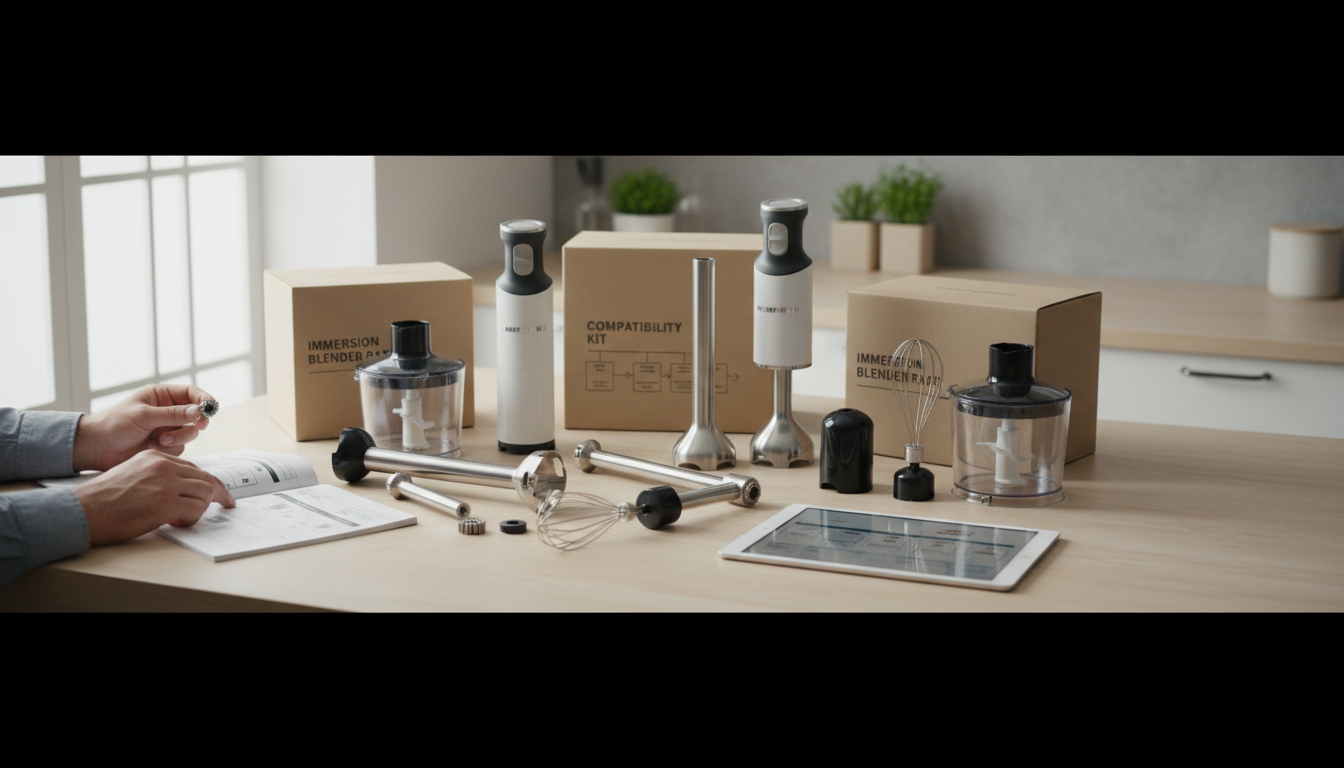
Navigating Immersion Blender Replacement Parts
An immersion blender, often called a hand blender or stick blender, is a versatile kitchen tool designed for blending ingredients directly in their containers. Its purpose ranges from pureeing soups and sauces to making smoothies and emulsifying dressings, offering convenience by minimizing transfers and extra dishes.
Over time, even well-maintained immersion blenders can experience wear and tear, leading to the need for replacement parts. Common components that frequently require attention include blending shafts, detachable blades, and various accessories that see regular use. Damage from accidental drops or prolonged operation can also necessitate replacing specific parts to restore functionality.
Finding compatible replacement parts is crucial for both the proper function and safety of your appliance. Using incorrect components can lead to inefficient blending, further damage to the unit, or even pose a safety risk during operation. Matching the part precisely to your immersion blender's model ensures seamless integration and optimal performance.
This guide aims to simplify the process of identifying, sourcing, and purchasing the correct replacement parts. We will explore key criteria for determining compatibility, discuss trade-offs between repairing and replacing the entire unit, and provide guidance to help you make an informed decision that extends the life of your immersion blender.
Understanding Your Immersion Blender's Anatomy
An immersion blender operates through the coordinated function of several distinct components, each playing a vital role in its blending capabilities. Familiarity with these parts is key to accurately identifying what needs replacement and ensuring compatibility.
The core of any immersion blender consists of three primary sections:
- Motor Housing (Power Unit): This is the upper section, typically designed as the handle. It encases the electric motor, which provides the power for blending, along with the control buttons for operation and speed settings. The motor housing is the appliance's power source and control center, connecting to the blending shaft.
- Blending Shaft (Wand): Extending from the motor housing, this long, often detachable, rod houses the drive mechanism. It acts as the conduit, transferring rotational power from the motor down to the blade assembly. The length and material of the shaft can vary, impacting its reach and durability.
- Blade Assembly: Located at the very end of the blending shaft, this component directly processes food. It typically features a protective bell housing that surrounds sharp blades. This design helps contain splashes and guides ingredients towards the blades for efficient processing.
Beyond these core elements, many immersion blenders include various attachments that expand their utility:
- Whisk Attachment: Designed to aerate liquids, ideal for whipping cream, egg whites, or making light batters.
- Chopper Attachment: A small, lidded bowl with its own set of blades, powered by the main motor housing, used for finely chopping herbs, nuts, or small quantities of vegetables.
- Beaker or Measuring Cup: Often provided for convenient blending directly in a suitable container.
These parts work in unison: the motor in the housing rotates an internal drive shaft, which then engages with either the blade assembly at the end of the blending wand or the gears within an attachment (like a chopper or whisk). This mechanical linkage is what enables the blades or whisk to spin and perform their function.
Through regular use, certain components are more susceptible to wear or damage. The blade assembly is frequently replaced due to dulling, bending, or chipping from contact with hard ingredients or accidental impacts. The blending shaft can also experience issues, particularly with its internal drive coupling or if it becomes bent. For attachments, the whisk head can deform, and the chopper blades can dull or break. While the motor housing itself is generally robust, the internal motor or circuit board can fail, though such repairs are often not cost-effective compared to replacing the entire unit.
Identifying the Right Part: A Step-by-Step Guide
Accurately identifying the specific replacement part your immersion blender needs is the foundational step to a successful repair. Without precise information, you risk purchasing incompatible components, leading to frustration and wasted resources. This methodical approach helps ensure you find the correct match for your appliance.
- Diagnose the Specific Problem: Before searching for parts, pinpoint exactly what is malfunctioning. Is the blade dull or bent, leading to inefficient blending? Is the blending shaft cracked, leaking, or no longer attaching securely to the motor housing? Are attachment accessories, like whisks or choppers, broken or missing pieces? A clear understanding of the damaged component will narrow your search considerably. Visual inspection, along with recalling the specific moment of failure, can be highly effective here.
- Locate Essential Identification Information: Your immersion blender carries crucial details that unlock compatibility. Look for a label, often located on the motor housing, the base of the unit, or sometimes on the power cord. This label typically includes the brand name, the specific model number (e.g., "HB-1234," "CSB-79"), and sometimes a serial number. These identifiers are unique to your appliance and are indispensable for sourcing the correct parts.
- Understand the Importance of Model Numbers: Even within the same brand, immersion blenders can have subtle variations between models, making parts non-interchangeable. A blade designed for one model might not fit another, even if they appear similar. Using the precise model number ensures that any part you consider is engineered to integrate seamlessly with your specific unit's design and mechanics.
- Consult Appliance Documentation: Your immersion blender's user manual is a valuable resource. It often contains exploded diagrams of the appliance, listing individual components with their corresponding part numbers. If the physical manual is unavailable, visit the manufacturer's official website. Most manufacturers provide digital manuals, parts lists, and sometimes even direct links to purchase replacement parts for their various models. This is often the most reliable way to find exact part numbers.
By following these steps, you gather the necessary information to confidently search for and select compatible replacement parts, avoiding common pitfalls and ensuring a proper fit.
Key Compatibility Factors for Immersion Blender Parts
Ensuring a replacement part integrates seamlessly with your immersion blender requires careful attention to several critical compatibility factors. Overlooking any of these can lead to an ill-fitting component, inefficient operation, or even further damage to your appliance.
-
Brand and Model Specificity The foundational step in finding a compatible replacement part is identifying your immersion blender's exact brand and model number. Manufacturers design parts specifically for their units, meaning components from one brand or even a different model within the same brand are unlikely to fit or function correctly. This information is typically found on a label on the motor housing, the original packaging, or in the user manual.
-
Part Number Verification Beyond the brand and model, look for a specific part number. This alphanumeric code is often printed directly on the part itself, in your appliance's manual, or on the manufacturer's website. Verifying this number is the most reliable method to ensure an exact match, preventing issues with fit or function that might not be obvious from a visual inspection alone.
-
Dimensions and Fit For parts like blending shafts, blade assemblies, or whisk attachments, physical dimensions are crucial. Measure the length, diameter, and examine the connection points (e.g., how the shaft attaches to the motor housing, or how the blade assembly connects to the shaft). Even a small discrepancy can prevent proper assembly, secure attachment, or safe operation, potentially causing instability during use.
-
Material Considerations The material of a replacement part impacts both safety and durability. Ensure that any part coming into contact with food is made from food-grade plastic or stainless steel. Stainless steel offers greater longevity and resistance to staining and odors, particularly for blades and blending shafts. Other materials might be suitable for housing components or accessories, but food contact surfaces demand specific safety standards.
-
Attachment Mechanisms Immersion blender parts utilize various attachment mechanisms, such as screw-on, snap-on, or twist-lock designs. The replacement part must feature the identical mechanism to securely connect with your existing motor housing or other components. An incompatible attachment method will prevent proper assembly and render the part unusable, regardless of other matching specifications.
-
OEM vs. Aftermarket Parts When sourcing parts, you'll encounter both OEM (Original Equipment Manufacturer) and aftermarket options. OEM parts are produced by the original manufacturer and are designed to match specifications precisely. Aftermarket parts are made by third-party companies. While often more budget-friendly, their quality, material composition, and precise fit can vary. Prioritize reputable aftermarket suppliers if choosing this route, and always compare specifications closely to mitigate potential fit or performance discrepancies.
Common Immersion Blender Parts and Their Lifespan
Understanding which immersion blender components are most prone to wear and tear can help in identifying when a replacement part is needed. Each part serves a distinct function, and its operational life is influenced by usage frequency, type of ingredients processed, and maintenance. Recognizing the signs of failure in these key components is crucial for timely repair and maintaining blending efficiency.
-
Blades: The primary cutting element, blades are subjected to significant stress.
- Signs of wear/failure: Dullness, which leads to less efficient processing and stringier results, is common over time. Bending or breakage, often from encountering hard ingredients or accidental impact, can cause vibration, imbalance, and complete blending failure.
- Impact on efficiency: Dull blades require longer blending times and may not achieve desired textures. Bent or broken blades can damage the blending shaft or motor.
- Lifespan & Care: Blade lifespan varies greatly; heavy use with tough ingredients shortens it. Rinsing immediately after use and avoiding blending excessively hard, dry items can prolong blade sharpness.
-
Blending Shafts: This component encases the drive mechanism that transfers power from the motor to the blades.
- Signs of wear/failure: Bending of the shaft can cause severe vibration and an unbalanced spin, indicating structural fatigue or impact damage. Cracked housing, especially near the blade guard, can allow liquid ingress, posing a safety risk and potentially damaging internal components. Worn internal connections might manifest as the motor running but the blades failing to spin, or an intermittent power transfer.
- Impact on efficiency: A compromised shaft can lead to inefficient blending, potential motor strain, and safety hazards if electrical components are exposed to moisture.
- Lifespan & Care: Shafts are generally robust but can be damaged by drops or twisting forces. Ensuring the shaft is properly attached and detached, and avoiding impact, helps preserve its integrity.
-
Whisk/Chopper Attachments: These specialized accessories extend the immersion blender's versatility.
- Signs of wear/failure: For choppers, dull or broken blades and damaged gears within the attachment housing are common, leading to ineffective chopping or complete loss of function. Whisk attachments can suffer from bent or broken wires. Cracked housing on either can compromise their effectiveness and safety.
- Impact on functionality: Damage to these attachments limits the appliance's ability to perform specific tasks like whipping or finely dicing.
- Lifespan & Care: Lifespan depends on the force applied and frequency of use. Overloading chopper attachments or bending whisk wires during storage or cleaning are common causes of premature failure. Hand washing and careful storage can extend their utility.
-
Blending Cups/Containers: Often included for convenience, these containers hold ingredients during blending.
- Signs of wear/failure: Cracks, leaks, or degradation of the material (e.g., cloudiness, staining, or becoming brittle for plastic) are typical issues. Leaks can occur from cracks or ill-fitting lids.
- Impact on use: Compromised containers can lead to spills, mess, and an inability to effectively blend or store ingredients.
- Lifespan & Care: Plastic containers may degrade with repeated exposure to heat (dishwasher), harsh chemicals, or impact. Glass alternatives are more durable but susceptible to breakage. Gentle cleaning and avoiding extreme temperature changes help maintain their condition.
The general lifespan of these components under normal use can range from several months to many years, heavily dependent on the user's habits. Consistent cleaning, avoiding overloading the motor or blades, and storing parts carefully are key practices to extend the life of these essential immersion blender components.
Repairing vs. Replacing: When to Buy a New Immersion Blender
Deciding whether to repair an immersion blender or invest in a new one involves weighing several practical factors. This choice impacts not only your finances but also the longevity of your kitchen tools and, potentially, your environmental footprint. Evaluating the specific issue against the broader context of cost, availability, and feasibility can help you make an informed decision.
Consider the following points when assessing your immersion blender's future:
- Cost-Benefit Analysis: Compare the price of the necessary replacement part against the cost of a new immersion blender. While common components like blending shafts or detachable blades might be relatively inexpensive, repairs involving internal mechanisms, such as a dead motor or faulty circuit board, can often cost between $70 and $150. Given that many new immersion blenders range from $80 to $120, the repair cost can quickly approach or exceed the price of a complete new unit. Factor in potential shipping costs for parts and any fees for professional repair services.
- Part Availability: The ease of finding replacement parts varies significantly by brand, model, and age of the appliance. For popular, current models, parts are generally accessible. However, older or less common immersion blenders may have discontinued or scarce parts, making repair difficult or impossible. This challenge can push the decision towards replacement, particularly if proprietary components are required.
- Complexity of Repair: Assess the nature of the damage. Simple repairs, such as swapping out a worn blade assembly or a damaged blending shaft, are often straightforward and can be completed by the user with minimal tools. More complex issues, like internal wiring problems, switch malfunctions, or motor component failures, typically require specialized knowledge, tools, or professional intervention. Attempting intricate repairs without expertise can lead to further damage or safety risks.
- Non-Repairable Issues: Some problems are inherently difficult or uneconomical to repair. Motor failure, for instance, is frequently cited as a reason to replace the entire unit, especially if the appliance is no longer under warranty. Extensive damage to the main housing, such as significant cracks that compromise structural integrity or expose internal components, can also render an immersion blender unsafe or impractical to repair. Minor cosmetic wear, however, does not typically necessitate replacement.
- Warranty Considerations: Before purchasing any replacement parts or attempting a repair, check if your immersion blender is still under warranty. Many manufacturers offer a limited warranty that covers defects in materials or workmanship for a specific period. Performing self-repairs might void an active warranty, whereas a warranty claim could lead to a free repair or a full replacement from the manufacturer.
- Environmental and Economic Impact: Opting to repair extends the lifespan of your appliance, reducing electronic waste and its associated environmental impact. This choice supports a more sustainable approach to consumption. Economically, repairing can be a sound decision if the cost is significantly less than a new unit and the repair ensures several more years of reliable service. However, if the repair cost is high, or if a new model offers substantial improvements in efficiency, features, or durability, replacing the unit might offer better long-term value and economic sense.
Frequently Asked Questions About Immersion Blender Parts
Navigating the world of replacement parts can raise several questions, especially when aiming to restore an appliance to full functionality. Here are concise answers to common queries regarding immersion blender components.
How do I know which replacement part I need for my immersion blender?
The most critical piece of information is your immersion blender's specific model number. This number dictates compatibility for all components. You can typically find it:
- On a label affixed to the motor housing or the underside of the appliance.
- In the owner's manual that came with your blender.
- On the original packaging, if you still have it.
Once you have the model number, use it to search for parts from the manufacturer or reputable third-party suppliers.
Is it better to buy OEM or aftermarket replacement parts?
Both Original Equipment Manufacturer (OEM) and aftermarket parts have distinct advantages and disadvantages:
- OEM Parts: These are made by the original manufacturer of your immersion blender. They guarantee an exact fit, consistent quality, and often maintain any remaining warranty on your appliance. However, they can be more expensive and may have limited availability for older models.
- Aftermarket Parts: Produced by third-party companies, these can be more affordable and sometimes offer wider availability. Quality can vary significantly, so it's crucial to research the supplier's reputation. An aftermarket part might not always offer a perfect fit or the same durability as an OEM component, and using them could potentially void your original warranty.
The choice often comes down to balancing cost savings against guaranteed compatibility and quality.
When should I repair my immersion blender versus buying a new one?
Deciding between repair and replacement often hinges on the type of damage and the cost involved.
- Consider repair when: The damaged part is easily replaceable, such as a blending shaft, blade, or accessory cup, and the cost of the part is significantly less than a new unit. If the blender is relatively new and the issue is isolated to a single, accessible component, repair is often the economical choice.
- Consider buying a new one when: The motor fails or internal electrical components are damaged. Repairs for these issues can be complex, parts may be difficult to source, and the cost of repair, including potential labor, can often exceed the price of a new immersion blender. For example, motor repairs might cost as much or more than a new unit. Extensive housing damage that compromises safety or multiple failing components also suggest replacement.
Are immersion blender parts interchangeable between different brands?
Generally, immersion blender parts are not interchangeable between different brands, and often not even between different models from the same brand. Manufacturers design their appliances with specific dimensions, connection mechanisms, and power requirements. Attempting to use a part from a different brand or an incompatible model can lead to:
- Poor performance or an improper fit.
- Further damage to your appliance.
- Potential safety hazards during operation.
Always prioritize parts specifically listed as compatible with your immersion blender's model number.
What are the most common immersion blender parts that need replacing?
Regular use leads to wear and tear on several key components. The most frequently replaced parts for immersion blenders include:
- Blending Shafts/Wands: These are often exposed to food, impact, and cleaning, leading to wear on the blade assembly or internal drive mechanism.
- Blades: Whether integrated into the shaft or detachable, the blades can dull, bend, or break over time, reducing blending efficiency.
- Attachments and Accessories: Items like whisk attachments, chopper bowls, and measuring cups can get lost, cracked, or worn out.
- Gears or Couplings: While less common, the internal gears or drive couplings that connect the motor to the blending shaft can wear down, especially under heavy loads.
Extending Your Immersion Blender's Life with the Right Parts
Successfully navigating the world of immersion blender replacement parts empowers you to make informed decisions that benefit both your kitchen and your wallet. The journey from identifying a faulty component to installing a compatible replacement is a testament to thoughtful appliance maintenance.
To recap, ensuring compatibility is paramount. This involves:
- Accurate Model Identification: Locating your immersion blender's precise model number, often found on the motor housing or base, is the foundational step.
- Part Number Verification: Cross-referencing the specific part number of the component needing replacement with manufacturer specifications or reputable third-party listings.
- Visual Confirmation: When part numbers are ambiguous, carefully comparing images and specifications of potential replacements with your existing part.
- Source Reliability: Prioritizing purchases from authorized dealers or well-reviewed aftermarket suppliers to minimize risks of incorrect fit or premature failure.
The decision to repair or replace your entire immersion blender often hinges on a cost-benefit analysis. Minor issues, such as a worn blending shaft or a dull blade, are typically cost-effective to address with a new part. This approach extends the life of a functional motor and reduces electronic waste. However, more significant problems, like motor failure, can present a different scenario. Repairing a motor or internal switch mechanism can sometimes approach or even exceed the cost of a new unit, making full replacement a more practical choice in those instances. Weighing the price of parts and potential labor against the cost and features of a brand-new appliance is crucial.
By utilizing the information and steps outlined, you can confidently identify the correct parts, understand the trade-offs involved, and make a purchasing decision that aligns with your needs and budget. This proactive approach to appliance care not only saves money over time by avoiding unnecessary replacements but also contributes to a more sustainable household. Maintaining your kitchen appliances through thoughtful part replacement ensures they remain reliable tools, ready for countless culinary tasks.
More in Blender Replacement Parts
View AllBraun Hand Blender Replacement Parts: Essential for Immersion Blending Tasks
Braun Blender Replacement Parts: Ensuring Long-Term Performance and Reliability