KitchenAid Blender Jar Replacement Parts: Choosing the Right Fit
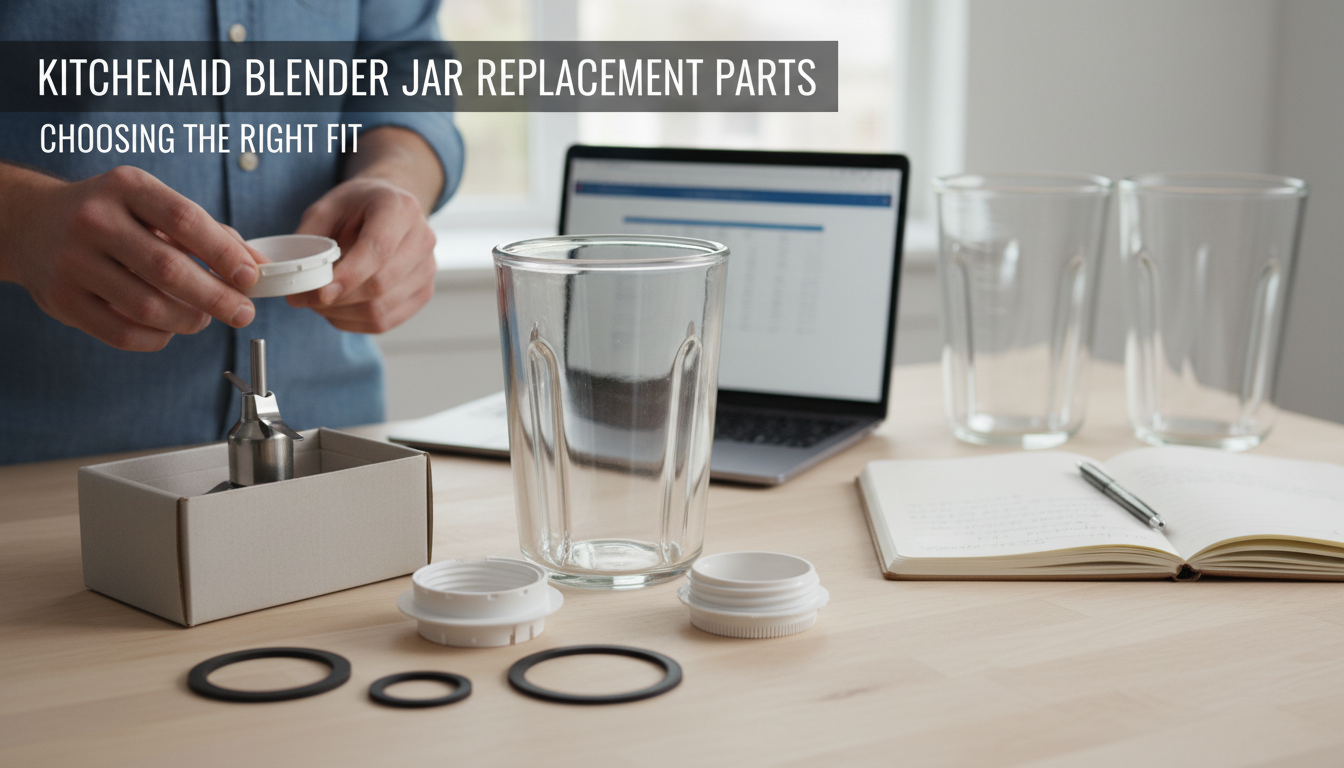
Revitalizing Your KitchenAid Blender with the Right Jar
Even the most durable KitchenAid blenders can experience wear and tear, and often, the blending jar is the first component to show signs of age. Whether due to an accidental drop, persistent leaks, hairline cracks from repeated use, or general wear, finding yourself in need of a replacement jar is a common scenario for many KitchenAid owners. A compromised jar can hinder blending performance, create messes, or even pose a safety risk if not properly sealed.
Selecting a replacement, however, isn't as simple as grabbing the first jar you see. KitchenAid offers various blender models, each designed with specific dimensions and coupling mechanisms. Precise compatibility is paramount to ensure not only a secure fit and optimal blending performance but also the safe operation of your appliance. An ill-fitting jar can lead to instability, leaks, or damage to the blender's motor base.
This guide is designed to empower you with the knowledge needed to confidently navigate the selection process. By understanding key compatibility factors, material choices, and potential pitfalls, you can make an informed purchase decision that extends the life and functionality of your KitchenAid blender.
Identifying Your KitchenAid Blender Model for Perfect Fit
Before considering any replacement jar, pinpointing your specific KitchenAid blender model is the foundational step. KitchenAid produces various blender lines, and jars are rarely universally interchangeable across different series or even within certain generations of the same series. An exact model match ensures the replacement jar will securely lock onto the motor base, correctly engage with the blade assembly, and provide a leak-proof seal, all critical for both performance and safety.
To accurately identify your blender's model number, follow these steps:
- Inspect the Blender Base: The most common location for the model number is on a sticker or engraved plate on the underside or rear of the motor base. Look for a label that typically begins with "KSB" followed by a series of numbers and letters (e.g., KSB560, KSB1570, KSB4027). For newer models, you might see designations like "K400" or "K150" followed by additional characters.
- Consult Your User Manual: If you still have the original owner's manual, the model number is usually printed on the front cover, the first few pages, or within the "Specifications" section. The manual may also list compatible accessories and replacement parts.
- Check the KitchenAid Website: If the physical label is worn or missing, and the manual is unavailable, visit the official KitchenAid support website. You might be able to locate your model by registering your product (if you haven't already) or by browsing their product archives with a visual identification.
Understanding the significance of these model series and variations is paramount. For instance, a jar designed for a KSB5 series blender will likely not fit a K400 series model due to differences in the base coupling mechanism and jar dimensions. Even within a series, minor revisions can sometimes affect compatibility, making the full alphanumeric model number essential. An incorrect jar could lead to:
- Poor Fit: The jar may not sit flush or securely on the base, causing instability during operation.
- Leakage: Incompatible seals or improper seating can result in ingredients leaking from the bottom of the jar.
- Damage to Components: Forcing an ill-fitting jar can strip the drive coupler on either the jar or the motor base, leading to costly repairs.
- Safety Hazards: An unstable or leaking jar can create a mess, pose an electrical risk, or even cause the blender to malfunction.
By taking the time to precisely identify your KitchenAid blender model, you mitigate these risks and set yourself up for a successful replacement that restores your appliance's full functionality.
Essential Criteria for Selecting a Replacement Jar
Once your KitchenAid blender's model is accurately identified, evaluating potential replacement jars involves a careful consideration of several key attributes. These factors directly influence durability, performance, and overall satisfaction with your blender's renewed functionality.
-
Jar Material: Glass vs. BPA-Free Plastic
- Glass: Often preferred for its scratch resistance, non-porous nature (resists odors and stains), and perceived aesthetic quality. Some glass jars are designed with thermal shock resistance, making them suitable for hot liquids. However, glass is heavier and more susceptible to shattering if dropped.
- BPA-Free Plastic: Offers superior shatter resistance and a lighter weight, making it easier to handle. While generally durable, plastic can be prone to scratching over time and may absorb strong odors or stains from certain ingredients if not cleaned promptly. Plastic jars are typically more affordable. Consider your primary blending tasks (e.g., frequent ice crushing, hot soups) and handling preferences when choosing.
-
Capacity Options
- Most replacement jars are designed to match the original capacity of your blender model, ensuring consistent performance.
- However, some models may offer alternative capacities. If you frequently blend larger batches or require a more compact jar for single servings, assess if an alternative capacity is compatible with your blender base and blade assembly. Ensure the motor can handle the volume if considering an upgrade in size.
-
Included Components
- Replacement jars can be sold as the jar only, or as a complete assembly including the lid, blade, and collar (the part that screws onto the motor base).
- Jar Only: Suitable if your existing lid, blade, and collar are in perfect condition and compatible. This is often the most economical option.
- Full Assembly: Provides convenience and ensures all critical components are new and designed to fit together seamlessly. This can be a good choice if your existing blade is dull, the lid is worn, or the collar is damaged. Verify that the included blade type matches your blending needs (e.g., ice crushing, soft ingredients).
-
Brand Considerations: OEM vs. Aftermarket
- Official KitchenAid (OEM): Original Equipment Manufacturer parts offer guaranteed compatibility and quality assurance directly from KitchenAid. They are designed to meet the brand's specifications and often come with a higher price point.
- Reputable Aftermarket: These jars are produced by third-party manufacturers. They can be a more budget-friendly option and offer wider availability. When considering aftermarket parts, prioritize sellers with strong reviews and clear compatibility statements to mitigate risks of poor fit, material quality issues, or premature wear.
-
Ease of Cleaning and Maintenance
- Look for jars with wide openings that allow for easy hand cleaning.
- Assess if the blade assembly can be easily removed for thorough cleaning, preventing food residue buildup.
- Check if the jar is dishwasher-safe, which can be a significant convenience factor.
-
Handle Design and Ergonomics
- A well-designed handle provides a secure and comfortable grip, especially when the jar is full and heavy.
- Consider the pouring spout design to minimize spills.
- For glass jars, evaluate the handle's integration to ensure it feels balanced and robust, reducing the risk of accidental drops.
Navigating Potential Pitfalls: What to Watch Out For
Purchasing a replacement jar for your KitchenAid blender requires careful consideration to avoid common issues that can compromise performance, safety, and your investment. While the goal is to restore your blender's functionality, a misstep in selection can lead to frustration or further damage. Being aware of these potential pitfalls can guide you toward a more confident and successful purchase.
-
Incorrect Model Fit and Operational Risks: The most critical pitfall is selecting a jar that doesn't precisely match your KitchenAid blender model. An ill-fitting jar might physically sit on the base but fail to properly engage the drive coupler, leading to operational issues or preventing the blender from starting. More dangerously, a poor fit can result in instability during operation, causing the jar to wobble, detach, or create an incomplete seal, potentially damaging the motor base or the jar itself. Such incompatibility can also void the original blender's warranty.
-
Leaks and Subpar Blending Performance: Even if a jar appears to fit, subtle discrepancies in design or manufacturing can lead to significant problems. Inadequate sealing, often due to a mismatch in the jar's base or the included gasket, can cause leaks during blending. Furthermore, an incorrectly shaped jar interior or a poorly designed blade assembly can disrupt the optimal vortex necessary for efficient blending, resulting in uneven textures, unblended chunks, and increased strain on the motor.
-
Material Quality Concerns: The durability and safety of your replacement jar largely depend on its material quality. Aftermarket options, particularly those at a significantly lower price point, may use inferior plastics or thinner glass.
- Plastic jars: Look for indications of food-grade, BPA-free plastics. Inferior plastics can be prone to scratching, clouding, absorbing odors, or cracking under stress or temperature changes.
- Glass jars: Thinner or lower-quality glass can be more susceptible to chipping, shattering, or thermal shock when blending hot or cold ingredients. Inspect for uniform thickness and clarity.
-
Issues with Included Blade Assemblies: Many replacement jars come with an integrated blade assembly. It's crucial to assess the quality of these components. Blades should be sharp and made from durable stainless steel to ensure effective and consistent blending over time. Equally important is the seal around the blade assembly; a weak or improperly fitted seal is a common source of leaks at the bottom of the jar, leading to messy cleanups and potential motor damage if liquids seep into the base.
-
Understanding Return Policies and Warranty Implications: Before purchasing any replacement part, clarify the seller's return policy, especially for aftermarket options. An ill-fitting or defective part needs to be returnable without undue hassle. Additionally, using non-OEM (Original Equipment Manufacturer) parts may impact your original KitchenAid blender's warranty. While OEM parts typically come with their own warranty and are designed to maintain your appliance's integrity, aftermarket parts usually do not offer this same level of assurance or protection.
-
Trade-offs Between Aftermarket and OEM Parts: The market offers both OEM KitchenAid replacement jars and various aftermarket alternatives.
- Aftermarket options often present a lower upfront cost and wider availability. However, this cost saving can come with compromises in material quality, precise fit, and long-term durability, potentially leading to the issues outlined above.
- OEM parts are manufactured to KitchenAid's exact specifications, ensuring a perfect fit, consistent quality, and reliability. While generally more expensive, they offer peace of mind regarding compatibility, performance, and often come with a manufacturer's warranty, effectively extending the life of your appliance with components designed to work seamlessly together.
Making an Informed Choice: Your Replacement Jar Decision Path
Selecting the correct replacement jar for your KitchenAid blender involves a structured approach to ensure compatibility, performance, and value. After accurately identifying your blender's model number, the next steps guide you through evaluating your options and confirming your selection. This process balances cost considerations with the desire for a durable, functional replacement.
Your decision path should navigate these key considerations:
-
Official KitchenAid Parts vs. Compatible Alternatives:
- Official KitchenAid Jars: These are manufactured by KitchenAid and are guaranteed to fit your specific model. They typically offer the same material quality and design as your original jar, ensuring seamless integration and often maintaining any existing warranty on the blender's base unit. The primary trade-off is often a higher price point. Investing in an official part prioritizes assured compatibility and brand-backed quality.
- Compatible (Aftermarket) Jars: These are produced by third-party manufacturers designed to fit KitchenAid blender models. They often come at a lower cost, which can be appealing for budget-conscious buyers. However, the quality of materials, precision of manufacturing, and exact fit can vary significantly. While many compatible jars perform adequately, there's an increased risk of minor fit issues, less durable materials, or a shorter lifespan compared to official parts.
-
Material Selection: KitchenAid blender jars are commonly available in glass or BPA-free plastic. Your choice here impacts both longevity and performance.
- Glass Jars: Offer superior scratch resistance, do not absorb odors or stains, and provide a classic aesthetic. They are generally heavier and more prone to breaking if dropped.
- Plastic Jars: Are lighter, more impact-resistant, and often more affordable. High-quality BPA-free plastics are durable, but some may be more susceptible to scratching, clouding over time, or absorbing strong food odors if not cleaned promptly. Consider your typical blending tasks and handling habits when choosing.
-
Key Questions Before Purchase: Before finalizing your decision, rigorously verify the product details. Asking these questions can help prevent compatibility errors and ensure satisfaction:
- "Is this replacement jar explicitly stated to be compatible with my exact KitchenAid blender model number?" Look for specific model numbers (e.g., KSB560, K400) listed in the product description, not just general brand compatibility.
- "Does the product description detail the jar's material (e.g., tempered glass, Tritan BPA-free plastic)?" This helps confirm quality and durability expectations.
- "What is the seller's return policy for compatibility issues or defects?" Understanding this provides a safety net if the part doesn't fit or perform as expected.
-
Verifying Product Descriptions and Customer Reviews:
- Product Descriptions: Cross-reference the features, dimensions, and stated compatibility with your blender's specifications. Look for clear images that show the base of the jar and how it connects.
- Customer Reviews: Pay close attention to reviews that specifically mention your blender model. Look for comments regarding fit, leaks, material quality, and long-term durability. Reviews can often highlight subtle compatibility issues or material shortcomings not evident in product descriptions alone. A pattern of positive reviews for your specific model can build confidence, while recurring negative feedback about fit or quality should prompt caution.
Frequently Asked Questions About KitchenAid Blender Jar Replacements
Navigating the market for a replacement KitchenAid blender jar can raise several practical questions. Understanding these common concerns can help you make an informed decision and ensure your new jar performs as expected.
-
Are aftermarket KitchenAid blender jars as good as official ones? The quality of aftermarket replacement jars can vary significantly. Official KitchenAid (OEM) jars are manufactured to precise specifications, ensuring a perfect fit, material consistency, and expected durability. Aftermarket options, while often more budget-friendly, may differ in material composition, thickness, and exact dimensions. Some third-party jars offer comparable performance, but others might exhibit issues with fit, sealing, or long-term resilience. It is crucial to scrutinize product descriptions, material specifications, and user reviews for aftermarket options to assess their reliability and compatibility before purchase.
-
Do replacement jars typically include the blade assembly and lid? This varies depending on the specific product listing. Some replacement jars are sold as a complete unit, which includes the jar, the blade assembly (often permanently attached or screw-on), a gasket, and the lid. Other listings may offer only the jar itself, requiring you to reuse your existing blade assembly and lid, or purchase them separately. Always review the product description carefully to confirm exactly which components are included with the replacement jar.
-
What should I do if my new replacement jar leaks? If your new jar leaks, first ensure all components are correctly assembled.
- Check Gasket Placement: Verify that the rubber gasket is properly seated and not twisted or damaged. A misplaced or worn gasket is a common cause of leaks.
- Tighten Blade Assembly: If your jar has a removable blade assembly, ensure it is securely tightened to the base of the jar.
- Confirm Compatibility: Double-check that the replacement jar is the exact model compatible with your blender base. Even slight discrepancies can prevent a proper seal.
- Inspect for Defects: Examine the jar, blade assembly, and lid for any hairline cracks, chips, or manufacturing deformities that might compromise the seal. If these steps do not resolve the issue, contact the seller or manufacturer, as the part may be defective.
-
How can I ensure the longevity of my new blender jar? Proper care and usage can significantly extend the life of your replacement jar.
- Follow Cleaning Instructions: Adhere to the manufacturer's cleaning guidelines. Some jars are dishwasher-safe, while others require hand washing to prevent damage or clouding.
- Avoid Extreme Temperature Changes: Do not transfer a hot liquid directly into a cold jar, or vice-versa, as sudden temperature shifts can cause thermal shock and cracking.
- Do Not Overfill: Stay within the maximum fill lines indicated on the jar to prevent pressure buildup and potential leaks during blending.
- Blend Appropriately: Avoid blending extremely hard, non-food items, or using the blender for tasks it wasn't designed for, which can stress the jar and blade assembly.
- Store Safely: Store the jar in a location where it is protected from accidental drops or impacts.
Sustaining Your Blending Experience
Choosing the correct replacement jar for your KitchenAid blender is an investment in the longevity and continued performance of your appliance. The core of a successful replacement hinges on precise model compatibility, ensuring the new jar locks securely and operates safely with your existing motor base. Equally important are your considerations for material type—whether the classic durability of glass or the lightweight resilience of BPA-free plastic—and whether to opt for an original equipment manufacturer (OEM) part for guaranteed fit or a reputable third-party alternative.
With a well-matched jar, your KitchenAid blender can continue to be a reliable tool in your kitchen, ready for smoothies, sauces, and soups for years to come. This informed decision revitalizes your appliance, often at a fraction of the cost of purchasing an entirely new unit, and reinforces the value of maintaining quality kitchen equipment.
To maximize the lifespan of your newly acquired jar and ensure consistent performance:
- Follow Cleaning Guidelines: Adhere to the manufacturer's specific cleaning instructions. Some jars are dishwasher safe, while others benefit from hand washing to preserve clarity and seals.
- Avoid Thermal Shock: Do not transfer extreme temperature differences to the jar. Allow very hot liquids to cool slightly before blending, and avoid placing a hot jar directly into cold water.
- Proper Storage: Store the jar upright and avoid placing heavy items on top of it, which could stress the material or lid.
- Regular Inspection: Periodically check the jar for any signs of wear, such as hairline cracks, dull blades (if integrated), or compromised seals, addressing issues proactively to prevent leaks or further damage.
More in Blender Replacement Parts
View All
Kenwood Blender Replacement Parts: Ensuring Compatibility and Long-Term Reliability