Cuisinart Hand Blender Replacement Parts: Maintaining Your Immersion Blender
Revitalize Your Cuisinart Hand Blender: A Guide to Replacement Parts
Cuisinart hand blenders, also known as immersion blenders, are valued kitchen tools for their convenience and versatility. Their ability to blend directly in pots, bowls, and cups streamlines tasks from crafting smooth soups and sauces to preparing quick smoothies. This efficiency makes them a staple for many home cooks.
Even with quality construction, regular use can lead to wear and tear on any appliance. Components like blending shafts, whisk attachments, or even power cords may eventually require attention. Rather than discarding a functional motor base for a minor part failure, replacing specific components offers a practical solution.
This guide is designed to empower Cuisinart hand blender owners to confidently identify, source, and select the correct replacement parts. Opting for targeted repairs can be a significantly more cost-effective choice than purchasing an entirely new unit. Furthermore, extending the life of your appliance contributes to reducing waste, aligning with more sustainable household practices.
Understanding Common Cuisinart Hand Blender Wear and Tear
Even well-built appliances like Cuisinart hand blenders can develop issues over time with regular use. Recognizing these common failure points is the first step toward effective maintenance and extends the life of your immersion blender through targeted part replacement. Many problems that might seem to signal the end of your appliance are often fixable with a specific replacement component.
One frequent concern involves the motor unit. While Cuisinart hand blenders are designed for efficiency, prolonged or heavy-duty use can sometimes lead to overheating. This might manifest as the blender shutting off unexpectedly during operation or a noticeable decrease in power. Though less common for complete motor failure, persistent overheating can degrade performance over time. Addressing other component failures, such as a stiff blending shaft or dull blades, can reduce the strain on the motor and prevent it from overworking.
Blade damage is another common issue that directly impacts blending effectiveness. Over time, blades can become dull, leading to less efficient processing and chunky results. More critically, accidental impact or prolonged stress can cause blades to bend or even break. A damaged blade not only compromises performance but can also create a safety hazard if fragments are introduced into food or if the imbalance causes excessive vibration. Replacing the blending shaft, which typically houses the blades, can restore optimal cutting power and ensure safe operation.
Lastly, electrical cords are susceptible to wear and tear, especially with frequent coiling, uncoiling, and storage. Fraying, cuts, or internal breaks in the cord can lead to intermittent power, complete failure to start, or, most importantly, present an electrical safety risk. An intact and properly functioning power cord is crucial for both the blender's operation and user safety. As resources like iFixit troubleshooting guides often highlight, checking the cord for damage is a fundamental diagnostic step for non-responsive blenders.
These issues—a struggling motor, dull or broken blades, or a compromised power cord—do not necessarily mean your entire Cuisinart hand blender is beyond repair. Often, the core motor housing remains functional while an attachment or cord needs attention. Opting for a specific replacement part allows owners to avoid the expense of a new unit and contributes to more sustainable appliance use, transforming a perceived breakdown into a manageable repair.
Finding the Perfect Fit: Identifying Your Cuisinart Hand Blender Model and Part
Successfully replacing a Cuisinart hand blender part hinges on accurate identification of both your specific appliance model and the exact component that needs attention. This precision helps ensure compatibility and avoids the frustration of purchasing an incorrect item.
To confidently pinpoint the right replacement part, follow these steps:
-
Locate Your Cuisinart Hand Blender Model Number: This is the most crucial piece of information. Cuisinart produces various hand blender series, such as the popular Smart Stick line, with distinct model numbers like CSB-75, CSB-79, or more recent iterations.
- Check the Appliance Itself: Often, the model number is printed on a rating label located on the underside of the motor unit or along the side of the handle.
- Review Your Original Instruction Manual: The manual typically lists the model number prominently on the cover or within the specifications section. It may also contain diagrams specific to your model.
- Examine the Original Packaging: If you still have the box, the model number will be clearly printed on it.
-
Identify the Specific Part Requiring Replacement: Once you know your model, visually inspect the damaged or worn component. Be as precise as possible.
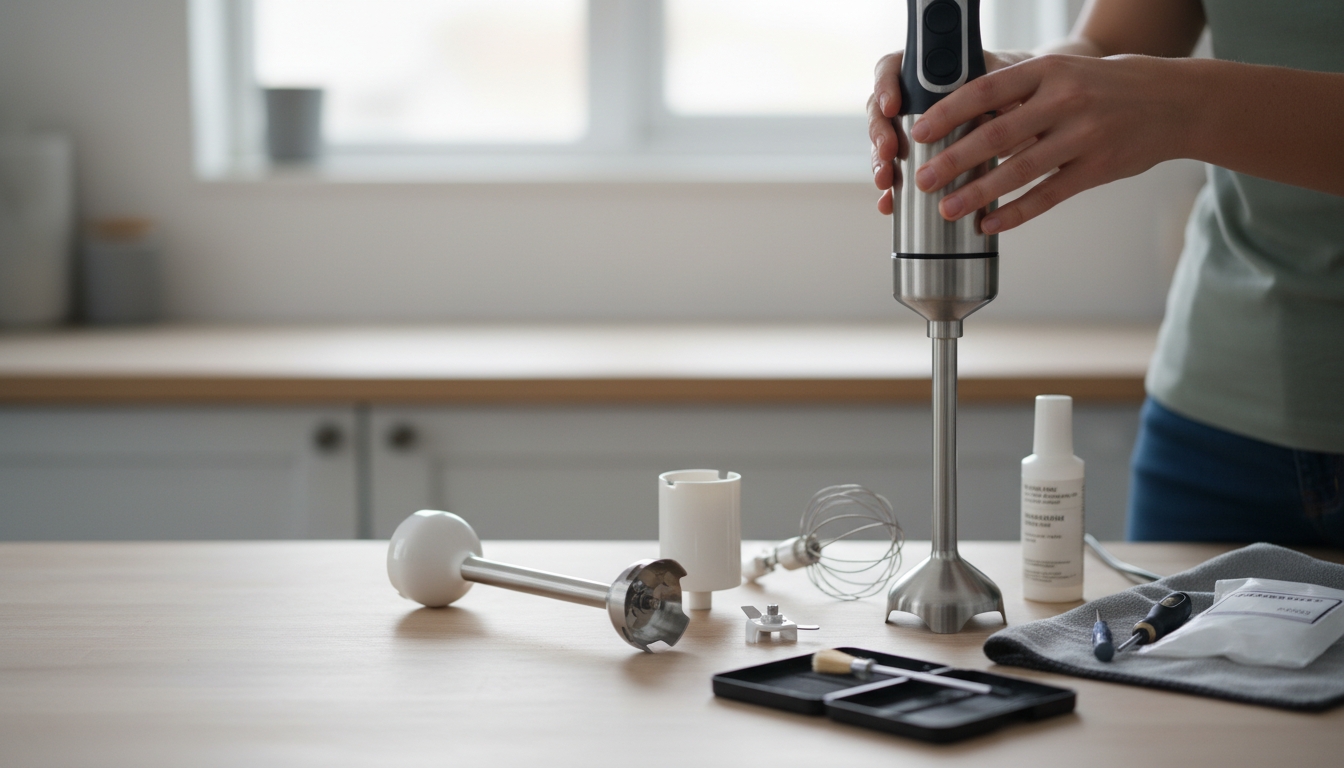
- Is it the blending shaft (the long metal or plastic arm with the blade at the end)? Note if it's detachable or integrated.
- Is it a whisk attachment (the wire whisk component)?
- Perhaps a chopper bowl or its associated chopping blade?
- In some cases, it might be the motor unit itself, though this often warrants a broader repair assessment.
- Consider smaller components like a drive gear or coupler if the issue is with the connection between the motor and attachment.
-
Consult Your Instruction Manual for Part Diagrams and Numbers: Many Cuisinart manuals include an "exploded view" diagram of the blender, breaking down its components. These diagrams often label each part with a specific manufacturer part number. This part number is invaluable for precise ordering, as it removes ambiguity regarding size, fit, and design variations between similar-looking parts for different models.
-
Utilize the Cuisinart Website: The official Cuisinart website often provides support sections where you can search by model number to find available parts, diagrams, or even downloadable versions of your instruction manual if yours is lost. This can be a reliable source for verifying part compatibility.
Essential Cuisinart Hand Blender Components You Can Replace
Extending the lifespan of your Cuisinart hand blender often involves identifying and replacing specific components that experience wear or damage. Understanding which parts are commonly available and their typical failure points can help owners make informed repair decisions, avoiding the need to purchase an entirely new appliance. Many of these parts are designed for user-friendly replacement, allowing for targeted maintenance.
-
Blending Shafts and Blades The primary working component of an immersion blender, the blending shaft, houses the blades responsible for processing food. These shafts come in various lengths to accommodate different container depths. Over time, the blades can become dull from extensive use, leading to less efficient blending and requiring more effort from the motor. More significantly, impacts or processing exceptionally hard ingredients can cause blades to bend, chip, or break, rendering the blender ineffective. A damaged shaft can also lead to improper sealing, causing leaks.
-
Whisk Attachments Many Cuisinart hand blenders include a whisk attachment, ideal for aerating liquids, whipping cream, or beating eggs. These attachments typically consist of a gear-driven head and wire tines. Common reasons for replacement include bent or broken whisk wires, which can impair performance, or internal gear wear that prevents the whisk from rotating properly.
-
Chopper/Grinder Bowls and Blades For models equipped with a mini chopper or grinder attachment, the associated bowl and blade assembly are frequently replaced. The plastic bowls can crack or become scratched with repeated use or accidental drops. Similar to the main blending blades, the chopper blades can dull over time, reducing their effectiveness at mincing or grinding ingredients.
-
Mixing Cups and Beakers Cuisinart hand blenders often come with a dedicated mixing cup or beaker, designed to fit the blending shaft perfectly and minimize splatter. These cups are typically made of durable plastic but can be lost, stained, or damaged (e.g., cracked or melted) through regular use or exposure to high heat, necessitating replacement for continued convenience.
-
Power Cords As an electrical appliance, the integrity of the power cord is crucial for both functionality and safety. Frayed insulation, cuts, or damage near the plug or where the cord enters the motor housing can pose an electrical hazard and prevent the blender from operating. Replacing a damaged cord is a critical safety repair.
-
Motor Units and Housing (Limited Availability) While the core motor unit itself is generally a robust component and less commonly available as a standalone consumer-replaceable part across all models, some Cuisinart hand blender housing components or specific motor sub-assemblies might be found for particular models. Issues like persistent motor overheating, often indicated by the blender shutting off during use, can sometimes be exacerbated by other failing parts (like a stiff blending shaft forcing the motor to work harder). However, direct motor unit replacement by consumers is less common than for external attachments.
Making Your Purchase: Sourcing and Selecting Cuisinart Hand Blender Parts
When seeking replacement parts for your Cuisinart hand blender, the decision-making process involves understanding your options, verifying compatibility, and assessing the risks involved. Your goal is to confidently identify the correct part and make an informed decision on where and what to buy, ultimately extending your appliance's useful life.
Navigating Part Options: Genuine vs. Aftermarket
A primary consideration is whether to opt for genuine Cuisinart Original Equipment Manufacturer (OEM) parts or aftermarket alternatives. Each category presents distinct advantages and trade-offs.
- Genuine OEM Cuisinart Parts: These components are manufactured by or for Cuisinart, ensuring they meet the brand's specifications for fit, function, and material quality.
- Pros: Guaranteed compatibility with specified models, consistent performance, often maintains the original aesthetic, and can prevent potential warranty issues with the main unit. The blending shaft, for instance, is sourced directly from the original manufacturer.
- Cons: Typically higher in cost compared to aftermarket options.
- Aftermarket Parts: Produced by third-party manufacturers, these parts are designed to be compatible with Cuisinart hand blenders but are not officially endorsed or supplied by Cuisinart.
- Pros: Generally more affordable, offering a budget-friendly repair solution, and can sometimes be more readily available from various online retailers.
- Cons: Quality can vary significantly, leading to potential issues with precise fit, durability, or performance. Poorly manufactured aftermarket parts, especially for critical components like blades or electrical wiring, could pose safety concerns or even damage your appliance. Using non-OEM parts might also inadvertently void any remaining warranty on your Cuisinart hand blender.
Authorized Sources and Purchase Considerations
For genuine Cuisinart hand blender replacement parts, authorized channels offer the most reliable purchasing experience.
- Direct from Cuisinart: The official Cuisinart website (Cuisinart.com) provides a direct avenue to purchase authorized replacement parts and accessories for hand blenders. This ensures authenticity and direct access to manufacturer support.
- Authorized Retailers: Reputable online parts distributors, such as eReplacementParts.com, are known to carry genuine Cuisinart replacement parts. These platforms often specify if a part is a "genuine Cuisinart replacement part, not an aftermarket imitation."
When purchasing from any source, always verify the seller's reputation. Look for customer reviews and ratings, and carefully review their return policies. A clear return policy is crucial in case the part doesn't fit or is defective upon arrival. Understanding customer support options can also provide peace of mind for post-purchase assistance.
Essential Checks Before Buying
To minimize the risk of purchasing an incorrect or incompatible part, thorough verification is critical.
- Model Number Verification: Your Cuisinart hand blender's specific model number is the most crucial piece of information. This is typically found on a label on the motor unit or base of the appliance. Different Cuisinart hand blender models, even those that appear similar, can have subtle variations in part dimensions or connections.
- Part Number Cross-Reference: If your existing broken part has a visible part number, use it to cross-reference with the replacement part's description.
- Explicit Compatibility: Ensure the product description explicitly states compatibility with your specific Cuisinart hand blender model. Do not assume compatibility based on appearance alone.
- Review Product Details: Carefully examine product descriptions, specifications, and images. Compare the replacement part's images against your existing part to identify any subtle differences in design or connection points.
Trade-offs and Use Case Influences
Your specific situation will influence the best purchasing decision.
- Urgency: If your need for a part is immediate, prioritizing authorized dealers with reliable shipping might outweigh a slight cost difference.
- Budget: For less critical, non-mechanical parts, a well-reviewed aftermarket option might be a suitable budget-conscious choice. However, for essential components like the motor or blade assembly, the higher cost of an OEM part often translates to greater reliability and safety, making it a worthwhile investment.
- Specific Part Type:
- Critical Components: For parts directly impacting performance or safety, such as the blending shaft, motor components, or electrical cords, genuine OEM parts are generally recommended to ensure optimal function and mitigate risks.
- Accessory Parts: For attachments like whisk accessories or beaker lids, where precise mechanical function is less critical, a high-quality aftermarket option might be considered if budget is a primary concern.
Understanding these distinctions and performing due diligence before purchase empowers you to make an informed decision that extends the life of your Cuisinart hand blender effectively and safely.
Extending Lifespan: Care Tips for Your Cuisinart Immersion Blender
Proactive maintenance and proper usage can significantly extend the life of your Cuisinart hand blender and its individual components. By adopting a few key habits, you can reduce wear and tear, prevent common issues, and minimize the need for premature part replacements.
- Thorough Cleaning Practices: After each use, promptly detach the blending shaft and any other removable attachments. Wash these components immediately in warm, soapy water to prevent food residue from drying and hardening, which can strain blades or mechanisms. For the motor body, wipe it clean with a damp cloth, ensuring no liquids enter the motor housing. Always dry all parts completely before reassembly or storage to prevent corrosion or mildew.
- Safe Storage Habits: To prevent accidental damage, store your hand blender and its attachments in a designated space where they won't be knocked over or have heavy items placed on them. Consider using the original packaging or a dedicated drawer to keep components together and protected from impacts that could bend shafts or crack plastic parts.
- Preventing Motor Overheating: Cuisinart hand blenders are designed for efficiency, but continuous, heavy-duty operation can lead to motor strain. To avoid overheating, blend in short bursts rather than prolonged, uninterrupted cycles. Avoid overfilling containers or attempting to blend extremely thick, dense ingredients for extended periods, as this increases the load on the motor. If the unit feels warm, allow it to cool down before resuming use.
- Basic Troubleshooting for Common Issues: Before assuming a part is broken, perform simple checks.
- Power Supply: Ensure the blender's cord is securely plugged into a functional electrical outlet. Test the outlet with another appliance if necessary.
- Attachment Security: Verify that the blending shaft or other attachments are correctly and firmly secured to the motor body. A loose connection can prevent operation.
- Obstructions: Check for any food particles or debris that might be jamming the blades or connection points.
- Repair vs. DIY Replacement Considerations: For issues like a non-functional motor, a complete unit replacement or professional repair might be more practical, especially if the cost of multiple parts approaches that of a new blender. However, for common problems such as a dull blending blade, a worn whisk attachment, or a damaged storage case, a DIY part replacement is often a cost-effective and straightforward solution. Evaluate the complexity of the repair and the availability of the specific part before deciding.
Frequently Asked Questions About Cuisinart Hand Blender Replacement Parts
Navigating the world of appliance repair can bring up several questions, especially when seeking specific components for your Cuisinart hand blender. Understanding how to identify your model, where to source parts, and what to do under warranty can simplify the process and help you make informed decisions.
-
How do I find my Cuisinart hand blender's model number? The model number is crucial for ensuring you purchase compatible replacement parts. Typically, you can locate it on a label affixed to the underside of the motor unit, the base of the handle, or sometimes on the power cord tag. If these locations don't yield results, consult the original instruction manual that came with your appliance, as it will always list the specific model.
-
Where can I purchase genuine Cuisinart hand blender replacement parts? For assured compatibility and quality, genuine Cuisinart replacement parts are recommended. These can be sourced directly from the official Cuisinart website's parts and accessories section. Additionally, authorized online retailers specializing in appliance parts, such as eReplacementParts.com, often carry a selection of genuine Cuisinart components. Purchasing from these channels helps ensure the part meets manufacturer specifications.
-
Are aftermarket Cuisinart hand blender parts reliable? Aftermarket parts, while sometimes more affordable, introduce a degree of risk. Their reliability can vary significantly depending on the manufacturer. Genuine Cuisinart parts are designed to precise specifications, ensuring optimal fit and performance. Aftermarket alternatives may not always match these standards, potentially leading to issues with fit, durability, or even affecting the blender's overall function and safety. Exercise caution and thoroughly vet sellers and product reviews if considering non-genuine options.
-
What should I do if my Cuisinart hand blender is still under warranty? If your Cuisinart hand blender is experiencing issues while still under its manufacturer's warranty, your first step should be to contact Cuisinart customer service directly. Attempting repairs yourself or using non-genuine replacement parts could potentially void your warranty. The manufacturer's support team can guide you through the warranty claim process, which may involve repair, replacement, or providing genuine parts at no cost.
-
Can I replace the motor unit myself? Replacing the motor unit of a Cuisinart hand blender is generally a complex task that is not recommended for the average user. Motor units are often sealed within the main housing and involve intricate electrical connections. Attempting such a repair without proper tools, technical knowledge, and safety precautions can be hazardous and may cause further damage to the appliance. In cases of motor failure, it's often more practical to consult a professional appliance repair service or evaluate the cost-effectiveness of purchasing a new unit.
Keep Blending: The Value of Smart Replacement
Choosing to replace a specific component on your Cuisinart hand blender is a practical and environmentally conscious decision. Rather than prematurely retiring a functional appliance, targeted repairs extend its service life, often at a fraction of the cost of a new unit. This approach minimizes waste and maximizes the value of your initial investment, aligning with more sustainable consumption practices.
By understanding how to accurately identify your blender's model, recognize common wear points, and navigate the options for sourcing genuine and compatible parts, you are empowered to make informed choices. This knowledge allows you to confidently acquire the exact Cuisinart hand blender replacement parts needed for a successful repair.
Ultimately, maintaining your appliance through intelligent part replacement ensures that your Cuisinart hand blender remains a reliable and efficient tool in your kitchen for many more years of blending, whisking, and chopping.