Krups Blender Replacement Parts: Compatibility and Sourcing Guide
Revive Your Krups Blender: A Guide to Replacement Parts
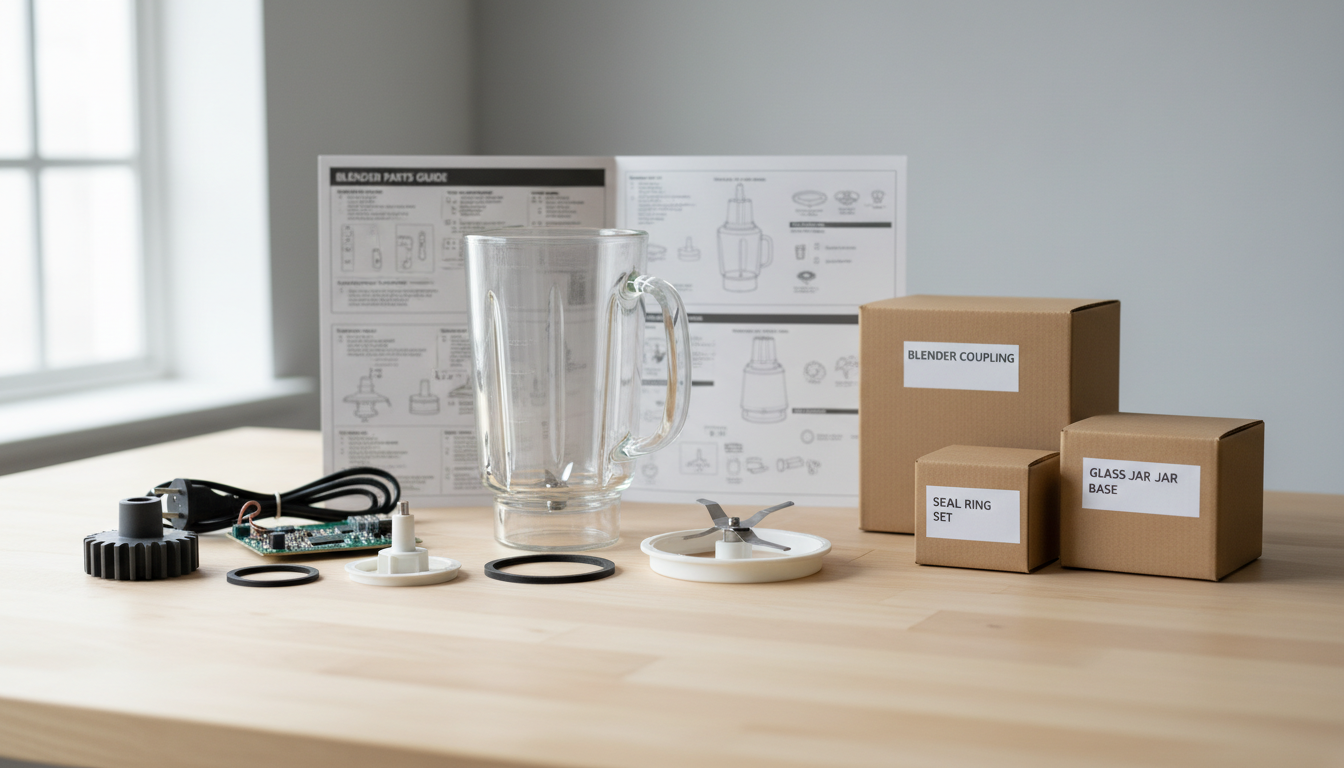
Krups blenders are often chosen for their robust design and consistent performance, making them a valued kitchen appliance. However, even the most durable machines experience wear and tear over time. Components such as blades, gaskets, or couplers can degrade with regular use, impacting blending efficiency or causing leaks. When this occurs, replacing a specific part can be a more practical solution than investing in an entirely new unit.
Opting for replacement parts offers distinct advantages. It presents a cost-effective alternative, allowing you to extend the lifespan of your existing appliance without the expense of a full replacement. Furthermore, it contributes to sustainability by reducing electronic waste. This guide is designed to empower Krups blender owners to confidently navigate the process of identifying, sourcing, and purchasing the correct replacement parts.
This guide will cover:
- Accurate Part Identification: How to pinpoint the exact component your Krups blender needs.
- Compatibility Assurance: Understanding model numbers and specifications to ensure a perfect fit.
- Sourcing Options: Exploring both genuine Krups parts and reliable compatible alternatives.
- Avoiding Common Pitfalls: Guidance on what to watch out for to prevent incorrect purchases or further issues with your Krups blender.
Why Opt for Replacement Parts Instead of a New Blender?
When a Krups blender begins to show signs of wear or malfunction, the immediate thought might be to replace the entire unit. However, choosing to repair with replacement parts often presents a more advantageous path for many owners. This decision is rooted in practical benefits that extend beyond simply fixing a broken appliance.
One primary advantage is cost-effectiveness. Replacing a specific component, such as a worn blade, a leaking gasket, or a damaged jar, typically incurs a fraction of the cost of purchasing a brand-new Krups blender. This approach allows you to restore functionality without a significant financial outlay, preserving your budget for other needs.
Beyond the immediate savings, repairing your blender contributes to sustainability. Extending the operational life of your existing appliance directly reduces electronic waste, lessening the environmental impact associated with manufacturing, packaging, and disposing of new consumer goods. It's a conscious choice that supports a more circular economy.
Furthermore, many owners value the familiarity and consistent performance of their current Krups blender. A trusted appliance, once repaired, continues to deliver the blending results you've come to expect without the need to adapt to a new model's features, power, or design. This maintains your kitchen workflow and ensures your preferred blending experience. For those facing a malfunctioning blender, opting for replacement parts efficiently solves the problem without the expense, research, and inconvenience of a full appliance replacement.
Identifying Your Krups Blender Model and the Right Part
Accurately identifying your specific Krups blender model is the foundational step in finding compatible replacement parts. Without this crucial information, purchasing parts becomes a gamble, often leading to incompatibility and frustration. Once the model is known, diagnosing the specific faulty component allows for targeted repair, saving time and resources.
To pinpoint your blender's model number:
- Check the Base: Most Krups blenders have a label or engraving on the underside of the motor base. This label typically includes the model number, series number, or a combination of letters and numbers that identify your appliance.
- Consult the User Manual: If you still have the original manual, the model number is usually prominently displayed on the cover or within the product specifications section.
- Examine the Packaging: Should you retain the original box, the model information is often printed on it.
After confirming your model, observe your blender's performance to identify which part requires replacement. Different components exhibit distinct signs of wear or damage:
- Blades/Blade Assemblies: These are critical for blending efficiency.
- Signs of an issue: Dullness leading to inefficient blending, visible chips or bends in the blades, or leakage from the base of the blade assembly during operation.
- Gaskets/Sealing Rings: These rubber or silicone rings create a watertight seal between the blade assembly and the jar, or between the jar and the lid.
- Signs of an issue: Visible cracks, hardening, or stretching of the material, leading to liquid leaking from the blender jar during use.
- Blender Jars/Pitchers: The main container for blending.
- Signs of an issue: Cracks, chips, or fractures in the plastic or glass, persistent cloudiness that cleaning does not resolve, or damage to the pouring spout or handle.
- Couplers/Drive Gears: These components transmit power from the motor to the blade assembly.
- Signs of an issue: Stripped plastic teeth on either the motor base or the blade assembly, a grinding noise when the blender is turned on but the blades do not spin, or a complete failure to engage (a known issue for models like the Krups 243 blender, where the coupler can wear down).
- Lids/Filler Caps: These cover the blender jar and often include a removable cap for adding ingredients.
- Signs of an issue: Cracks or breaks in the plastic, a loose fit that causes splashing during blending, or a filler cap that no longer seals securely.
By systematically identifying your blender's model and matching symptoms to specific parts, you can confidently proceed to source the correct replacement, ensuring a proper fit and restoring your Krups blender's functionality.
Where to Find Genuine and Compatible Krups Blender Replacement Parts
Sourcing the correct replacement part for your Krups blender involves navigating several channels, each with distinct advantages and considerations. Understanding these options can help you make an informed decision based on your priorities for authenticity, cost, and availability.
Official Krups Channels
The most direct route for genuine parts is through the Official Krups Website or Authorized Service Centers.
- Pros: These sources guarantee authentic Krups parts, ensuring precise compatibility and adherence to original manufacturing standards. Purchasing directly may also preserve any remaining warranty on your appliance, depending on the repair and warranty terms. You can often find parts by entering your product reference number.
- Cons: Prices for genuine parts can be higher compared to third-party alternatives. Availability for older or discontinued models might be limited, and shipping times can vary.
- Fit & Risk: This option is ideal when absolute authenticity is paramount, for critical components like motor couplings, or if your blender is still under warranty and you want to avoid potential invalidation. The main trade-off is often cost.
Authorized Parts Retailers
Specialized Authorized Parts Retailers, such as Fix.com, offer another reliable avenue for obtaining genuine Original Equipment Manufacturer (OEM) Krups parts.
- Pros: These retailers often stock a broad range of parts, sometimes with expert support available to help identify the correct component. They can provide a good balance between authenticity and accessibility, often with competitive shipping options.
- Cons: While generally comprehensive, their inventory might not include every single part for all Krups models. Prices, while potentially lower than direct from Krups, still reflect the quality of OEM parts.
- Fit & Risk: This is a strong option for common wear-and-tear parts like blades, gaskets, or jars. It mitigates some of the risks associated with unverified sellers while still providing access to quality components. Always verify the retailer's authorization status to ensure you are receiving genuine parts.
Online Marketplaces
Platforms like Amazon provide a vast selection of Krups blender replacement parts, including both genuine and compatible options.
- Pros: These marketplaces offer wide availability and often competitive pricing due to the large number of sellers. User reviews can sometimes provide insights into product fit and quality.
- Cons: The primary risk lies in verifying seller reputation and product authenticity. Counterfeit or low-quality parts are a possibility, and compatibility claims can sometimes be inaccurate. It requires careful scrutiny of product descriptions and seller ratings.
- Fit & Risk: Online marketplaces can be suitable for less critical components where cost is a significant factor, or for finding third-party compatible options. However, due diligence is essential to avoid purchasing incorrect or substandard parts that could lead to further damage or safety issues.
Third-Party Manufacturers and Compatible Parts
Beyond genuine Krups parts, third-party manufacturers produce compatible replacement parts.
- Pros: These alternatives are often more affordable and can be a viable option when genuine parts are unavailable or cost-prohibitive. They may offer solutions for older models that Krups no longer supports.
- Cons: Quality can vary significantly among different manufacturers. While some compatible parts perform well, others may not fit perfectly, wear out quickly, or fail to meet safety standards. Using non-genuine parts might also void any remaining manufacturer warranty.
- Fit & Risk: Compatible parts are best considered for non-critical components like extra jars or basic gaskets where a perfect aesthetic or exact material match is less crucial. For parts directly impacting safety or performance (e.g., blade assemblies, motor components), the potential risks associated with variable quality often outweigh the cost savings. Always prioritize reputable third-party brands with positive reviews and clear return policies.
Ensuring Compatibility and Avoiding Common Pitfalls
Selecting the correct replacement part for your Krups blender is crucial for both functionality and safety. An incompatible part can lead to poor performance, further damage to your appliance, or even safety hazards. Careful identification and evaluation are key to a successful repair.
To confidently choose the right part and mitigate risks, consider the following:
-
Verify the Exact Model Number: This is the most critical step. Krups often produces blenders with similar appearances but different internal components. Locate the precise model number, usually found on a sticker on the bottom or back of your blender's motor base, or within the user manual. Even a single digit or letter difference can mean a part is incompatible. Cross-reference this exact model number with the part's listed compatibility.
-
Understand OEM vs. Aftermarket Parts:
- OEM (Original Equipment Manufacturer) Parts: These are manufactured by Krups or by a supplier specifically authorized by Krups. They are designed to meet original specifications, offering the highest likelihood of a perfect fit, intended performance, and often come with a manufacturer's assurance. However, they typically come at a higher cost.
- Aftermarket (Compatible) Parts: Produced by third-party manufacturers, these parts aim to function as alternatives to OEM components. They are generally more affordable, but quality can vary.
- Trade-offs: While cost-effective, aftermarket parts may not always match the original material specifications, leading to potential differences in durability or performance.
- Fit Limits & Failure Points: Some non-OEM parts might have slight dimensional discrepancies, leading to a less secure fit, increased vibration, or premature wear. Materials might be less robust, potentially causing issues like stripped gears in couplings or weaker plastic in jars. They typically do not carry the original manufacturer's warranty.
-
Assess Material Quality: Regardless of whether you choose OEM or aftermarket, scrutinize the materials. For blades, look for durable stainless steel. Gaskets and seals should be made of food-grade rubber or silicone that resists degradation from blending ingredients and cleaning. Jars should be made from robust, impact-resistant, food-safe plastics or glass. Inferior materials can affect performance, longevity, and safety.
-
Thoroughly Review Product Descriptions and Images: Before purchasing, carefully compare the replacement part's description and images against your original Krups part.
- Visual Match: Does the new part look identical to your old one in shape, color, and connection points?
- Dimensions: Check any listed dimensions (e.g., blade diameter, jar height, coupling size) to ensure they align with your blender's requirements.
- Connection Points: Pay close attention to how the part connects to other components, such as the motor base or blade assembly. Mismatched connections are a common cause of incompatibility.
-
Consult Customer Reviews for Your Specific Model: When available, customer reviews can offer practical insights into a part's real-world compatibility and durability. Look for feedback from other Krups owners who have the exact same model number as your blender. Pay attention to comments regarding:
- Ease of installation and fit.
- Performance and durability over time.
- Any reported issues like leaks, excessive noise, or premature wear.
Frequently Asked Questions About Krups Blender Parts
Navigating the world of replacement parts can raise several questions, especially when aiming to extend the life of a specific appliance like a Krups blender. Understanding common concerns can help in making informed decisions.
-
How do I know if my blender part is replaceable? Most common wear components on Krups blenders, such as blade assemblies, gaskets, sealing rings, and blender jars, are designed to be replaceable. To confirm, consult your specific Krups blender model's user manual or visit the official Krups USA accessories store online. These resources typically list available replacement parts by model number, indicating what can be individually purchased and swapped out.
-
Can I use parts from a different Krups blender model? Generally, it is not recommended to interchange parts between different Krups blender models. Even subtle differences in design, such as blade shaft dimensions, jar base diameters, or motor coupling mechanisms, can lead to incompatibility. Using an incorrect part can result in poor performance, leaks, damage to the appliance, or even safety issues. Always match the replacement part to your blender's exact model number.
-
Are compatible (aftermarket) parts as good as genuine Krups parts? The quality of compatible or aftermarket parts can vary significantly. Genuine Krups parts are manufactured to the brand's specifications, often ensuring a precise fit and intended performance. Compatible parts can be a more budget-friendly option, but their material quality, durability, and exact fit might differ. When considering aftermarket options, look for sellers with strong reputations and positive reviews specifically mentioning compatibility and performance with Krups models.
-
What should I do if I can't find a specific part for my older Krups model? Begin your search on the official Krups accessories store, using your blender's full model number. If the part is not listed there, expand your search to reputable online retailers specializing in appliance replacement parts. For very old or discontinued models, parts may become scarce. In such cases, weigh the cost and effort of an extensive search against the potential investment in a newer appliance, or consider specialized appliance repair shops that might have access to broader inventories.
-
How do I clean and maintain my new replacement parts for longevity? To maximize the lifespan of your new replacement parts, adhere to the cleaning and care instructions provided in your Krups blender's user manual. Generally, this involves rinsing parts immediately after use to prevent food residue from drying. Hand washing blades and gaskets with mild soap and warm water is often recommended. Ensure all parts are completely dry before reassembling or storing to prevent mold or odors, and avoid using abrasive cleaners that could damage surfaces or seals.
Empowering Your Krups Blender's Second Life
Extending the utility of your Krups blender through replacement parts is a practical and sustainable choice. This guide has aimed to equip you with the knowledge to confidently approach this task. The core of a successful repair lies in two critical steps: accurate identification of the needed part and careful sourcing.
By understanding your specific Krups blender model and the exact component requiring replacement, you avoid common pitfalls like incompatible purchases. Whether opting for genuine Krups parts directly from the manufacturer or carefully vetted compatible alternatives, informed sourcing ensures quality and fit. Remember, repairing your appliance often represents a significant cost saving compared to purchasing a new unit, while also contributing to reduced electronic waste.
Armed with the criteria for compatibility, the understanding of various sourcing options, and an awareness of potential risks, you are now better prepared to make an informed decision. This approach not only restores your blender's functionality but also reinforces a cycle of mindful consumption. Investing a little time in identifying and acquiring the right Krups blender replacement part allows you to extend your appliance's lifespan, ensuring many more years of reliable blending and making a positive impact on both your budget and the environment.
More in Blender Replacement Parts
View All
Osterizer 14-Speed Blender Replacement Parts: Keeping Your Vintage Blender Running
Braun Immersion Blender Replacement Parts: Essential for Hand Blending Tasks